Friday, February 24, 2012

Psychopathy

Snakes in Suits: When Psychopaths Go to Work is a book by industrial psychologist Paul Babiak, Ph.D. and psychopathy expert Dr Robert D. Hare, Ph.D. published in 2006.
It covers the nature of psychopaths in the context of employment and explains
  • how psychopaths manipulate their way into work and get promoted,
  • the effects of their presence on colleagues and corporations, and
  • the superficial similarities (and fundamental differences) between leadership skills and psychopathic traits.
The work is interlaced with fictional narrative illustrating how the factual content applies to real-life situations.

***


I had been doing some reading on Psychopathy.

I first came across the book while going through a second hand store. I had previously been doing some research. It so happen the book cover image was something I recognized on the shelf,  so I  paid a sum of  $6.00.  I had thought what a deal. It's something I do when I scour second hand stores.  I am always heading directly for the books.

Anyway,  there are reasons that I had been doing this research.  It also raises some concern as to how people not qualified could have judged each other without really having the credentials for doing so. Not that anyone said I was, but it concerns me that one could lack that empathy and emotional force within. Have a disregard for how other people could be hurt emotionally by such callus.


***


ABOUT  "I am <fishead(" MOVIE
by MISHA VOTRUBA and VACLAV DEJCMAR


Narrated by Peter Coyote


how psychopaths and antidepressants influence our society
a provocative snapshot of the world we live in


It is a well-known fact that our society is structured like a pyramid. The very few people at the top create conditions for the majority below. Who are these people? Can we blame them for the problems our society faces today? Guided by the saying "A fish rots from the head." we set out to follow that fishy odor. What we found out is that people at the top are more likely to be psychopaths than the rest of us.


Who, or what, is a psychopath? Unlike Hollywood's stereotypical image, they are not always blood-thirsty monsters from slasher movies. Actually, that nice lady who chatted you up on the subway this morning could be one. So could your elementary school teacher, your grinning boss, or even your loving boyfriend. The medical definition is simple: A psychopath is a person who lacks empathy and conscience, the quality which guides us when we choose between good and evil, moral or not. Most of us are conditioned to do good things. Psychopaths are not. Their impact on society is staggering, yet altogether psychopaths barely make up one percent of the population.
SEE:  "I am fishead

***


WATCH#1 from fishead on Vimeo.


WATCH#2 from fishead on Vimeo.

See Also: Business-Scan (B-SCAN) by P. Babiak, Ph.D. & R. D. Hare, Ph.D.

Monday, February 20, 2012

CERN News: CERN News - LHC to run at 4 TeV per beam in 2012


On a lighter note......a story perhaps from 2007?:)

Flattening the World: Building a Global Knowledge Society


The focus of the 2012 meeting, then, is on using the power of electronic communications and information resources to tackle the complex problems of the 21st century on a global scale through international, multidisciplinary efforts. We have a model already in the scale and scope of the Intergovernmental Panel on Climate Change (IPCC). But that’s just the beginning. The interconnections among, for example, climate change, agriculture, and health are as yet poorly understood; predictive modeling is in its infancy.
The ability to approach global problems through global collaborations depends on an educated populace and on substantial scientific and technological sophistication throughout the world. Thus building the global knowledge society depends on advancing education and research, the engines of the knowledge society, everywhere. This task is facilitated, but not accomplished, by the existence of electronically accessible open educational resources. There remain limitations of language and culture, of poverty and access.See: Flattening the World: Building a Global Knowledge Society(bold added by me for emphasis)


Flattening the world sounds like something that you would not like to return in thinking about the push for society to become better informed and pulled out of the dark ages? But it's not really about that. It's about leveling the playing field in terms of,  "Globalization of Knowledge."

 WIRED: What do you mean the world is flat?
Thomas Lauren Friedman

FRIEDMAN: I was in India interviewing Nandan Nilekani at Infosys. And he said to me, "Tom, the playing field is being leveled." Indians and Chinese were going to compete for work like never before, and Americans weren't ready. I kept chewing over that phrase - the playing field is being leveled - and then it hit me: Holy mackerel, the world is becoming flat. Several technological and political forces have converged, and that has produced a global, Web-enabled playing field that allows for multiple forms of collaboration without regard to geography or distance - or soon, even language. See: Why the World Is Flat

The theme above then in opening linked article is like a mission statement.  So in a sense,  I highlight with the paragraphs above to illustrate what a stubborn scientist frustrated has been like,  locked in his own perspective about climate change( it seems a formulation principle arises with the basis of that topic. Okay, the presentation is specific and he talks about Quantum Computing) That one might in his case may cast a wide sweeping statement about the aims and purposes of giving as much knowledge as possible to the masses, as being leftist.

 Right,  left?  Nothing like being stereotype, yet,  a question in my mind exists about globalization? Suffering from "the products"  from which one could have grown up,  you can understand indeed why such skepticism might be measured as a "dying voice of concern about that global village?"  This though,  is not about economics. You See?:)

The public, needs to be better informed. Remove the barriers and constraints to that knowledge you then are successful in raising the standards of communication across the world. It should lower the stress level for an  impatient scientist who is frustrated with the level of knowledge perceived from the basis of the questions asked by the public?:)

 Ask you self then.........In respect of knowledge, do those who control the medium, control the message?

 The very thing you might fight for is in fact a form of something that one might see as being repressed under a presentation of some communistic system,  when in fact,  such monopolistic controls are much the same?

***

So why have I stayed out of the climate debate change? One, because I do not know enough, and two, because I knew nature was ever present while we were contributing to the environment in which we live.

So the population,  since my looking into the subject of particle research has it's basis set in understanding our connectives to the space around us? What is happening in the airs above earth that you would not take notice? Cosmic particle research? It may help one understand the logo better? Like ideas,  particles exist all around us?:)

How does this then contribute to the understanding that nature is ever a greater force then humanity could ever think itself  as to the design of our place in history.

See Also:

Tuesday, February 14, 2012

Music of the Quantum


The weird quantum nature of the atomic world challenges us to revise the way we view the world around us. We learn that our everyday world - built out of the myriad superposition of matter waves, has an unexpected capacity for new kinds of behavior and "self organization" that we are only just beginning to fathom. Music of the Quantum World


See Also: Superconductivity Dance Flash Mob

Thursday, February 09, 2012

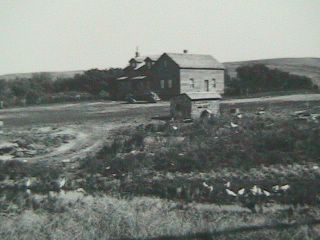
Ole Time Photo


This is a picture of my folks sitting on the stairs a bit before they were married. Also, some of their sisters and brother as well. A picture of my Grandma and Grandpa as well.


The house from which the picture was taken and the farm around .

See Also: 

The Landscape of the Neighborhood

Tuesday, February 07, 2012

Leonard Susskind on The World As Hologram


Leonard Susskind of the Stanford Institute for Theoretical Physics discusses the indestructability of information and the nature of black holes in a lecture entitled The World As Hologram.

Event with Four Muons

Holometer Revised

Please take note of updated links of this entry. Thanks for clarifications from these two sources.


  • The Hoganmeter


  • Hogan's holographic noise doesn't exist


  • ***

    This plot shows the sensitivity of various experiments to fluctuations in space and time. Horizontal axis is the log of apparatus size (or duration time the speed of light), in meters; vertical axis is the log of the rms fluctuation amplitude in the same units. The lower left corner represents the Planck length or time. In these units, the size of the observable universe is about 26. Various physical systems and experiments are plotted. The "holographic noise" line represents the rms transverse holographic fluctuation amplitude on a given scale. The most sensitive experiments are Michelson interferometers.

    The Fermilab Holometer in Illinois is currently under construction and will be the world's most sensitive laser interferometer when complete, surpassing the sensitivity of the GEO600 and LIGO systems, and theoretically able to detect holographic fluctuations in spacetime.[1][2][3]

    The Holometer may be capable of meeting or exceeding the sensitivity required to detect the smallest units in the universe called Planck units.[1] Fermilab states, "Everyone is familiar these days with the blurry and pixelated images, or noisy sound transmission, associated with poor internet bandwidth. The Holometer seeks to detect the equivalent blurriness or noise in reality itself, associated with the ultimate frequency limit imposed by nature."[2]

    Craig Hogan, a particle astrophysicist at Fermilab, states about the experiment, "What we’re looking for is when the lasers lose step with each other. We’re trying to detect the smallest unit in the universe. This is really great fun, a sort of old-fashioned physics experiment where you don’t know what the result will be."

    Experimental physicist Hartmut Grote of the Max Planck Institute in Germany, states that although he is skeptical that the apparatus will successfully detect the holographic fluctuations, if the experiment is successful "it would be a very strong impact to one of the most open questions in fundamental physics. It would be the first proof that space-time, the fabric of the universe, is quantized."[1]


    References


    1. ^ a b c Mosher, David (2010-10-28). "World’s Most Precise Clocks Could Reveal Universe Is a Hologram". Wired. http://www.wired.com/wiredscience/2010/10/holometer-universe-resolution/. 
    2. ^ a b "The Fermilab Holometer". Fermi National Accelerator Laboratory. http://holometer.fnal.gov/. Retrieved 2010-11-01. 
    3. ^ Dillow, Clay (2010-10-21). "Fermilab is Building a 'Holometer' to Determine Once and For All Whether Reality Is Just an Illusion". Popular Science. http://www.popsci.com/science/article/2010-10/fermilab-building-holometer-determine-if-universe-just-hologram.


    ***


    Fermilab Holometer


    About a hundred years ago, the German physicist Max Planck introduced the idea of a fundamental, natural length or time, derived from fundamental constants. We now call these the Planck length, lp = √hG/2Ï€ c3 = 1.6 × 10⁻³⁵ meters. Light travels one Planck length in the Planck time, tp = √hG/2Ï€ c5 = 5.4 × 10-44seconds. 


    The physics of space and time is expected to change radically on such small scales. For example, a particle confined to a Planck volume automatically collapses to a black hole. 


    See: Fermilab Holometer


    ***


    A Conceptual Drawing of the 'Holometer' via Symmetry


    “The shaking of spacetime occurs at a million times per second, a thousand times what your ear can hear,” said Fermilab experimental physicist Aaron Chou, whose lab is developing prototypes for the holometer. “Matter doesn’t like to shake at that speed. You could listen to gravitational frequencies with headphones.”


    The whole trick, Chou says, is to prove that the vibrations don’t come from the instrument. Using technology similar to that in noise-cancelling headphones, sensors outside the instrument detect vibrations and shake the mirror at the same frequency to cancel them. Any remaining shakiness at high frequency, the researchers propose, will be evidence of blurriness in spacetime


    “With the holometer’s long arms, we’re magnifying spacetime’s uncertainty,” Chou said.

    See: Hogan’s holometer: Testing the hypothesis of a holographic universe

    Sunday, February 05, 2012

    Bon Iver - Holocene (Official Music Video)


    My misses watched them on Saturday Night Live last night so I thought it worth the peek since she knows well my taste in music. You must admit the video is done well in concert with this music. It sort of raises the mystery of youth for most young men as they explore. Wonder about things around them as I do.

    At 4:36 of the video the young boy standing on the mound sort of raises a spectral feeling of the history for me. It's as if  one were to meld into this existence of "no barriers to our remembrance,"  might we see all the visual images of that history as far back as our humanity goes? This is a strange feeling for me and the music helps to nurture this creative thinking of "all time some how encapsulate in every moment." I guess the hill and this boy at that time represents this for me. The music for me aids in this exploration.

    Thursday, February 02, 2012

    Word Picture

     Undoubtedly we have no questions to ask which are unanswerable . We must trust the perfection of the creation so far, as to believe that whatever curiosity the order of things has awakened in our minds, the order of things can satisfy. Every man's condition is a solution in hieroglyphic to those inquiries he would put. He acts it as life, before he apprehends it as truth. In like manner, nature is already, in its forms and tendencies, describing its own design. Let us interrogate the great apparition, that shines so peacefully around us. Let us inquire, to what end is nature? See: Nature by Emerson

    I have this idea brewing for sometime in my mind and I am sure it fits with some who believe a comic strip while it can show it's humor can also show the discussion in science as well. But this is something quite subtle for what I had found in sciences developing mind that could at the same time speak about it's mathematics,  as well as unfolding in pictures who form as a continuous line of geometrical thinking. I might of in the past called it the Royal Road to Geometry, it was always the question of where all these lines of thinking could have evolved too.

    It always brings me back to the success of Einsteins to have realize that his freedom came when the geometry of Riemann was used to help move beyond the Euclidean frame of Reference:) While that success took to a malleable form of line bending(greater or less than the perfect line interferometer)(LIGO laser or GRACE), of course it's success was built on the successes of those before him. That's just the way of it.

    We see the earth much differently now. Much more then when it was first looked at from space, yet, there was individual peoples who dreamed of the earth from such a lofty ideal. Stepping out from the space capsule was an important step in moving beyond the fields of expression of an agricultural age.

    The importance of what I am saying is to understand the very act of "tracing back toward inside" where this line emerged from. So as to ask,  what is it that such emergence could encompass that we would say that the driving force of this manifestation?  It is to become ever the selection of matter constituents that will form the basis of the reality? So is it matter choosing or some deeper understanding of our having chosen to become partners in the reality we exist in? Where did this line lead too,  having traced it back to where it began?

    So the "word picture idea" is to understand that a universal language exists in each of us as a partner in the reality with which we participate? While one could have said that the math is revealing of the very schematics underlying this reality how does such math branch "outward" as it takes on the forms of what we find in nature? How are these mathematical terms "layered over" as to form the very conceptual basis of the words spoken? The word picture is a result then, but individual we shall choose it's covering, yet science must be very exact in this description.

     Paul Dirac


    When one is doing mathematical work, there are essentially two different ways of thinking about the subject: the algebraic way, and the geometric way. With the algebraic way, one is all the time writing down equations and following rules of deduction, and interpreting these equations to get more equations. With the geometric way, one is thinking in terms of pictures; pictures which one imagines in space in some way, and one just tries to get a feeling for the relationships between the quantities occurring in those pictures. Now, a good mathematician has to be a master of both ways of those ways of thinking, but even so, he will have a preference for one or the other; I don't think he can avoid it. In my own case, my own preference is especially for the geometrical way.


    So one traces back the development of our for-bearers of geometrical inquisition as to ask how to break free of the thoughts that we had been restricted too(Poincaré conjecture). This then is why our thrust to expression is the success based on the developing line of  geometry? Ask yourself.....shall Dali be your respite from what is sought in XY painting,  to have understood the Crucifix was leading even though Salvador's religion some vast question of a ideal based on the developing frame. It was the question of the association in mind as an artist? Where was this geometry leading then, as if leading to the ideal of what leads us all to our religion?

    Friday, January 27, 2012

    The dimensionality and geometry of the extra dimensions

    We investigate possible signatures of black hole events at the LHC in the hypothesis that such objects will not evaporate completely, but leave a stable remnant. For the purpose of de fining a reference scenario, we have employed the publicly available Monte Carlo generator CHARYBDIS2, in which the remnant's behavior is mostly determined by kinematic constraints and conservation of some quantum numbers, such as the baryon charge. Our fi ndings show that electrically neutral remnants are highly favored and a signifi cantly larger amount of missing transverse momentum is to be expected with respect to the case of complete decay. See: Black Hole Remnants at the LHC by L. Bellagambab, R. Casadioa;by, R. Di Sipioa;bz and V. Viventiax 16 Jan 2012

    ***
    ATLAS Experiment © 2011 CERN  "Black Hole" event superimposed over a classic image of the ATLAS detector.
    ***

    If the fundamental Planck scale is of order a TeV, as the case in some extradimensions scenarios, future hadron colliders such as the Large Hadron Collider will be black hole factories. The non-perturbative process of black hole formation and decay by Hawking evaporation gives rise to spectacular events with up to many dozens of relatively hard jets and leptons, with a characteristic ratio of hadronic to leptonic activity of roughly 5:1. The total transverse energy of such events is typically a sizeable fraction of the beam energy. Perturbative hard scattering processes at energies well above the Planck scale are cloaked behind a horizon, thus limiting the ability to probe short distances. The high energy black hole cross section grows with energy at a rate determined by the dimensionality and geometry of the extra dimensions.See: High Energy Colliders as Black Hole Factories: The End of Short Distance Physics

    Trackbacks for hep-ph/0106219

    Wednesday, January 25, 2012

    Quantum state


    Probability densities for the electron of a hydrogen atom in different quantum states.(Click on Image)

    In physics, a quantum state is a set of mathematical variables that fully describes a quantum system.

    ***

    Is there such a thing, as isometrical relations of orbitals, in cosmological designs? A Classical definition of the Quantum World perhaps?

    The Physics of Reality

    Roger Penrose discusses his experiment on the BBC (25 minutes in)
    Melvyn Bragg examines the physics of reality. When Quantum Mechanics was developed in the early 20th century reality changed forever. In the quantum world particles could be in two places at once, they disappeared for no reason and reappeared in unpredictable locations, they even acted differently according to whether we were watching them. It was so shocking that Erwin Schrodinger, one of the founders of Quantum Theory, said "I don’t like it and I'm sorry I ever had anything to do with it." He even developed an experiment with a cat to show how absurd it was.

    Quantum Theory was absurd, it disagreed with the classical physics of Newton and Einstein and it clashed with our experience of the everyday world. Footballs do not disappear without reason, cats do not split into two and shoes do not act differently when we are not looking at them. Or do they? Eighty years later we are still debating whether the absurd might actually be true See: The Physics of Reality

    See Also:

    Tuesday, January 24, 2012

    SOHO Latest and Space Weather

    EIT 304

    A large solar flare yesterday triggered a coronal mass ejection travelling at 1400 km/s that will reach Earth today. An energetic eruption of this level can disrupt satellites, so operation teams at ESA and other organisations are closely monitoring the storm.

    A coronal mass ejection (CME) is a huge cloud of magnetised plasma from the Sun's atmosphere – the corona – thrown into interplanetary space. They often occur in association with a solar flare. This ejection was detected by the ESA/NASA SOHO and NASA Stereo spaceborne solar observatories. 
    See: Solar storm heading toward Earth


    Center time of most recent polar pass measurement: 2012 Jan 25 0137 UTn = 2.16

    ALICE EMCal installation with Peter Jacobs

    Researcher Peter Jacobs explains what's happening as the final pieces of the ALICE experiment's electromagnetic calorimeter, or EMCal, are installed on Jan. 18 2012. Check out the symmetry breaking story for more.

      Jan 4, 2011 EMCAL Super Module installation at 40deg into ALICE slot 2 at CERN

     Nov 10, 2010 Loading an EMCAL SuperModule into the insertion tool, to prepare for the detector upgrade during the winter LHC shutdown.

    Wednesday, January 18, 2012

    Atlas Experiment Simulated Black Hole Photos

    ATLAS Experiment © 2011 CERN  A new view of a black hole event. ATLAS collision events. In some theories, microscopic black holes may be produced in particle collisions that occur when very-high-energy cosmic rays hit particles in our atmosphere. These microscopic-black-holes would decay into ordinary particles in a tiny fraction of a second and would be very difficult to observe in our atmosphere.
    The ATLAS Experiment offers the exciting possibility to study them in the lab (if they exist). The simulated collision event shown is viewed along the beampipe. The event is one in which a microscopic-black-hole was produced in the collision of two protons (not shown). The microscopic-black-hole decayed immediately into many particles. The colors of the tracks show different types of particles emerging from the collision (at the center).
    Photo #: black-hole-event-wide

    ATLAS Experiment © 2011 CERN  "Black Hole" event superimposed over a classic image of the ATLAS detector.

    See: Atlas Photos

    A Historical Look at Kaluza-Klein Particles?

    In 1919, Kaluza sent Albert Einstein a preprint --- later published in 1921 --- that considered the extension of general relativity to five dimensions. He assumed that the 5-dimensional field equations were simply the higher-dimensional version of the vacuum Einstein equation, and that all the metric components were independent of the fifth coordinate. The later assumption came to be known as the cylinder condition. This resulted in something remarkable: the fifteen higher-dimension field equations naturally broke into a set of ten formulae governing a tensor field representing gravity, four describing a vector field representing electromagnetism, and one wave equation for a scalar field. Furthermore, if the scalar field was constant, the vector field equations were just Maxwell's equations in vacuo, and the tensor field equations were the 4-dimensional Einstein field equations sourced by an EM field. In one fell swoop, Kaluza had written down a single covariant field theory in five dimensions that yielded the four dimensional theories of general relativity and electromagnetism. Naturally, Einstein was very interested in this preprint (Link is now dead but what is said here is very important and may help with imagery needed?)

    ***

    After having formulated general relativity Albert Einstein did not immediately focus on the unification of electromagnetism and gravity in a classical field theory - the issue that would characterize much of his later work. It was still an open question to him whether relativity and electrodynamics together would cast light on the problem of the structure of matter [?]. Rather, in a 1916 paper on gravitational waves he anticipated a different development: since the electron in its atomic orbit would radiate gravitationally, something that cannot occur in reality", he expected quantum theory would have to change not only the "Maxwellian electrodynamics, but also the new theory of gravitation" [?]2. Einstein's position, however, gradually changed. From about 1919 onwards, he took a strong interest in the unification programme3. In later years, after about 1926, he hoped that he would and a particular classical unified field theory that could undercut quantum theory. Such a theory would have to contain the material objects -sources and fields- and their dynamics. He would even expect the distinction between these concepts to fade: \a complete field theory knows only fields and not the concepts of particle and motion" [?]. We will study how he wanted to realize these principles in classical Kaluza-Klein theory, and try to see what his objectives and results were.See: Einstein and the Kaluza-Klein particle

    moving on further in the article toward the end...

    Bergmann, now in Syracuse, wrote Einstein and asked if they could have a discussion sometime:

    As anyone can only be a crank about his own ideas, and as you are someone who combines steadfastness with the ability to acknowledge his hypothesis could go wrong (usually one can only and just one of these qualities, mostly the latter) I would appreciate very much talking to you and hearing your observations; whether we appreciate the same or not, what we want is sufficiently related that we could easily come to an understanding." [?] 2

    Einstein replies:
    You are looking for an independent and new way to solve the fundamental problems. With this endeavor no one can help you, least of all someone who has somewhat fixed ideas. For instance, you know that on the basis of certain considerations I am convinced that the probability concept should not be primarily included in the description of reality, whereas you seem to believe that one should first formulate a field theory and subsequently 'quantize' it. This is in keeping with the view of most contemporaries. Your effort to abstractly carry through a field theory without having at your disposal the formal nature of the field quantities in advance, does not seem favorable to me, for it is formally too poor and vague."17 [?] 2

    ***

    Missing Energy Kicks New Physics Models Off The Board


    The signature of large missing energy and jets is arguably one of the most important avenues for the study of potential new physics signatures at today's hadron colliders.

    The above concept marks an interesting turn of events: the years of the glorification of charged leptons as the single most important tools for the discovery of rare production processes appears behind us. The W and Z discovery in 1983 by UA1 at CERN, or the top quark discovery by CDF and DZERO in 1995 at Fermilab, would have been impossible without the precise and clean detection of electrons and muons. However, with time we have understood that missing energy may be a more powerful tool for new discoveries.

    Missing energy arises when a violent collision between the projectiles -protons against antiprotons at the Tevatron collider, or protons against protons at the world's most powerful accelerator, the LHC- produces an asymmetric flow of energetic bodies out of the collision point in the plane orthogonal to the beams: a transverse imbalance. This is a clear signal that something is leaving the detector unseen. And it turns out that there is a host of new physics signals which can do precisely that.

    A large amount of missing transverse energy may be the result of the decay of a leptoquarks into jets and neutrinos, when the latter leave undetected; or from the silent escape of a supersymmetric neutral particle -the neutralino- produced in the chain of decays following the production of squarks and gluinos; or it may even be due to the escape of particles in a fourth dimension of space -an alternative dubbed "large extra dimensions".
    (see more in linked title above)

    ***
    I have been slowly moving through the explanations for the extra-dimensions that are being explained by Matt Strassler:

    In this article and the next, we will learn why extra dimensions lead to “Kaluza-Klein (KK) partner” particles (described in the previous article in this series, which you should read before this one.)  If a known type of  particle of mass m can travel in a dimension of which we are unaware — an “extra” dimension — then we will eventually discover many other types of particles, similar to the known one but heavier, with masses M>m.
    See: Kaluza-Klein Partners — Why? Step 1

    Sunday, January 15, 2012

    WHAT IS YOUR FAVORITE DEEP, ELEGANT, OR BEAUTIFUL EXPLANATION?

    Scientists' greatest pleasure comes from theories that derive the solution to some deep puzzle from a small set of simple principles in a surprising way. These explanations are called "beautiful" or "elegant". Historical examples are Kepler's explanation of complex planetary motions as simple ellipses, Bohr's explanation of the periodic table of the elements in terms of electron shells, and Watson and Crick's double helix. Einstein famously said that he did not need experimental confirmation of his general theory of relativity because it "was so beautiful it had to be true." See:2012 : WHAT IS YOUR FAVORITE DEEP, ELEGANT, OR BEAUTIFUL EXPLANATION?
    See which comments resonate with you. Some of my picks as I go through was by :

    Raphael Bousso
    Professor of Theoretical Physics, Berkeley


    My Favorite Annoying Elegant Explanation: Quantum Theory .......General Relativity, in turn, is only a classical theory. It rests on a demonstrably false premise: that position and momentum can be known simultaneously. This may a good approximation for apples, planets, and galaxies: large objects, for which gravitational interactions tend to be much more important than for the tiny particles of the quantum world. But as a matter of principle, the theory is wrong. The seed is there. General Relativity cannot be the final word; it can only be an approximation to a more general Quantum Theory of Gravity.

    But what about Quantum Mechanics itself? Where is its seed of destruction? Amazingly, it is not obvious that there is one. The very name of the great quest of theoretical physics—"quantizing General Relativity"—betrays an expectation that quantum theory will remain untouched by the unification we seek. String theory—in my view, by far the most successful, if incomplete, result of this quest—is strictly quantum mechanical, with no modifications whatsoever to the framework that was completed by Heisenberg, Schrödinger, and Dirac. In fact, the mathematical rigidity of Quantum Mechanics makes it difficult to conceive of any modifications, whether or not they are called for by observation.

    Yet, there are subtle hints that Quantum Mechanics, too, will suffer the fate of its predecessors. The most intriguing, in my mind, is the role of time. In Quantum Mechanics, time is an essential evolution parameter. But in General Relativity, time is just one aspect of spacetime, a concept that we know breaks down at singularities deep inside black holes. Where time no longer makes sense, it is hard to see how Quantum Mechanics could still reign. As Quantum Mechanics surely spells trouble for General Relativity, the existence of singularities suggests that General Relativity may also spell trouble for Quantum Mechanics. It will be fascinating to watch this battle play out.


    President, The Royal Society; Professor of Cosmology & Astrophysics; Master, Trinity...

    Physical Reality Could Be Hugely More Extensive Than the Patch of Space and Time Traditionally Called 'The Universe' .....As an analogy (which I owe to Paul Davies) consider the form of snowflakes. Their ubiquitous six-fold symmetry is a direct consequence of the properties and shape of water molecules. But snowflakes display an immense variety of patterns because each is molded by its distinctive history and micro-environment: how each flake grows is sensitive to the fortuitous temperature and humidity changes during its growth.

    If physicists achieved a fundamental theory, it would tell us which aspects of nature were direct consequences of the bedrock theory (just as the symmetrical template of snowflakes is due to the basic structure of a water molecule) and which cosmic numbers are (like the distinctive pattern of a particular snowflake) the outcome of environmental contingencies. .


    Theoretical physicist

    An Explanation of Fundamental Particle Physics That Doesn't Exist Yet.....What is tetrahedral symmetry doing in the masses of neutrinos?! Nobody knows. But you can bet there will be a good explanation. It is likely that this explanation will come from mathematicians and physicists working closely with Lie groups. The most important lesson from the great success of Einstein's theory of General Relativity is that our universe is fundamentally geometric, and this idea has extended to the geometric description of known forces and particles using group theory. It seems natural that a complete explanation of the Standard Model, including why there are three generations of fermions and why they have the masses they do, will come from the geometry of group theory. This explanation does not yet exist, but when it does it will be deep, elegant, and beautiful—and it will be my favorite.


    Mathematician, Harvard; Co-author, The Shape of Inner Space

    A Sphere....Most scientific facts are based on things that we cannot see with the naked eye or hear by our ears or feel by our hands. Many of them are described and guided by mathematical theory. In the end, it becomes difficult to distinguish a mathematical object from objects in nature.

    One example is the concept of a sphere. Is the sphere part of nature or it is a mathematical artifact? That is difficult for a mathematician to say. Perhaps the abstract mathematical concept is actually a part of nature. And it is not surprising that this abstract concept actually describes nature quite accurately.


    theoretical physicist; Professor, Department of Physics, University of California,...
     Gravity Is Curvature Of Spacetime … Or Is It?......We do not yet know the full shape of the quantum theory providing a complete accounting for gravity. We do have many clues, from studying the early quantum phase of cosmology, and ultrahigh energy collisions that produce black holes and their subsequent disintegrations into more elementary particles. We have hints that the theory draws on powerful principles of quantum information theory. And, we expect that in the end it has a simple beauty, mirroring the explanation of gravity-as-curvature, from an even more profound depth.


    Albert Einstein Professor in Science, Departments of Physics and Astrophysical...
    Quasi-elegance....As a young student first reading Weyl's book, crystallography seemed like the "ideal" of what one should be aiming for in science: elegant mathematics that provides a complete understanding of all physical possibilities. Ironically, many years later, I played a role in showing that my "ideal" was seriously flawed. In 1984, Dan Shechtman, Ilan Blech, Denis Gratias and John Cahn reported the discovery of a puzzling manmade alloy of aluminumand manganese with icosahedral symmetry. Icosahedral symmetry, with its six five-fold symmetry axes, is the most famous forbidden crystal symmetry. As luck would have it, Dov Levine (Technion) and I had been developing a hypothetical idea of a new form of solid that we dubbed quasicrystals, short for quasiperiodic crystals. (A quasiperiodic atomic arrangement means the atomic positions can be described by a sum of oscillatory functions whose frequencies have an irrational ratio.) We were inspired by a two-dimensional tiling invented by Sir Roger Penrose known as the Penrose tiling, comprised of two tiles arranged in a five-fold symmetric pattern. We showed that quasicrystals could exist in three dimensions and were not subject to the rules of crystallography. In fact, they could have any of the symmetries forbidden to crystals. Furthermore, we showed that the diffraction patterns predicted for icosahedral quasicrystals matched the Shechtman et al. observations. Since 1984, quasicrystals with other forbidden symmetries have been synthesized in the laboratory. The 2011 Nobel Prize in Chemistry was awarded to Dan Shechtman for his experimental breakthrough that changed our thinking about possible forms of matter. More recently, colleagues and I have found evidence that quasicrystals may have been among the first minerals to have formed in the solar system.

    The crystallography I first encountered in Weyl's book, thought to be complete and immutable, turned out to be woefully incomplete, missing literally an uncountable number of possible symmetries for matter. Perhaps there is a lesson to be learned: While elegance and simplicity are often useful criteria for judging theories, they can sometimes mislead us into thinking we are right, when we are actually infinitely wrong.


    Physicist, Harvard University; Author, Warped Passages; Knocking On Heaven's Door

    The Higgs Mechanism......Fortunately that time has now come for the Higgs mechanism, or at least the simplest implementation which involves a particle called the Higgs boson. The Large Hadron Collider at CERN near Geneva should have a definitive result on whether this particle exists within this coming year. The Higgs boson is one possible (and many think the most likely) consequence of the Higgs mechanism. Evidence last December pointed to a possible discovery, though more data is needed to know for sure. If confirmed, it will demonstrate that the Higgs mechanism is correct and furthermore tell us what is the underlying structure responsible for spontaneous symmetry breaking and spreading "charge" throughout the vacuum. The Higgs boson would furthermore be a new type of particle (a fundamental boson for those versed in physics terminology) and would be in some sense a new type of force. Admittedly, this is all pretty subtle and esoteric. Yet I (and much of the theoretical physics community) find it beautiful, deep, and elegant.

    Symmetry is great. But so is symmetry breaking. Over the years many aspects of particle physics were first considered ugly and then considered elegant. Subjectivity in science goes beyond communities to individual scientists. And even those scientists change their minds over time. That's why experiments are critical. As difficult as they are, results are much easier to pin down than the nature of beauty. A discovery of the Higgs boson will tell us how that is done when particles acquire their masses.


    Professor of Quantum Mechanical Engineering, MIT; Author, Programming the Universe
     The True Rotational Symmetry of Space.....Although this excercise might seem no more than some fancy and painful basketball move, the fact that the true symmetry of space is rotation not once but twice has profound consequences for the nature of the physical world at its most microscopic level. It implies that 'balls' such as electrons, attached to a distant point by a flexible and deformable 'strings,' such as magnetic field lines, must be rotated around twice to return to their original configuration. Digging deeper, the two-fold rotational nature of spherical symmetry implies that two electrons, both spinning in the same direction, cannot be placed in the same place at the same time. This exclusion principle in turn underlies the stability of matter. If the true symmetry of space were rotating around only once, then all the atoms of your body would collapse into nothingness in a tiny fraction of a second. Fortunately, however, the true symmetry of space consists of rotating around twice, and your atoms are stable, a fact that should console you as you ice your shoulder.

    Remember even though I pick some of these explanations does not mean I discount all others. It's just that some are picked for what they are saying in highlighted quotations. Lisi's statement on string theory is of course in my opinion far from the truth, yet,  he captures a geometrical truth that I feel exists.:) You sort of get the jest of where I am coming from in the summation of Paul Steinhardt

    Friday, January 13, 2012

    The Smoking Gun

    One string theorist even went so far to conclude that a string theory calculation of Kaluza-Klein modes was the "smoking gun" that proved our theory was the same as the string theory that string theorists had already been studying.Warped Passages: Unraveling The Mysteries of the Universes Hidden Dimensions by Lisa Randall Pg 436, Para 4

    Putting this together with what is real in our reality is of importance as well. While I may have my own metaphysical development and model building characteristics it was important that I learn the scientific one so that I could see where I may have been wrong in my own development scenario. Wrong in my own intuitions.

     Meanwhile I’m continuing to develop the Extra Dimensions series of articles, and I’ve now followed up my examples of extra dimensions with a next installment, a first discussion of what scientists would look for in trying to identify that our world actually has one or more extra dimensions .  The new article describes one of the key clues that would indicate their presence.  But this is far from the end of the story: I owe you more articles, explaining why extra dimensions would generate this clue, outlining how we try to search for this clue experimentally, and mentioning other possible clues that might arise.  All in due course…The Smoking Gun for Extra Dimensions by Theoretical Physicist Matt Strassler

    Some may of not been forced to question them-self  with what it is that we have to ask of ourselves,  as we delve into the world of the sciences and philosophies. To ask ourselves whether we had always been dealing with the truth of our getting to the heart of things.

    A professor may have asked what it is exactly what I wanted out of all of this,  and to him I have to relay a dream that has manifested because of his question.

    In the dream I have been provided a forum for discussing my ideas.....but when it came to the time for speaking,  my preparations,  I felt lost as to where to begin. So it seems I have come to this point in time, as to "shit or get off the pot" as to what it is I wish to share of importance?

    Giving these subjects the numbers of years since 2001, one would have thought  had served my own internship, but alas I remain ever the student with no classification. Yet it is the developing of the concepts with what is real in the push to experiment as to find what the real world examples are showing as attributes in the experimental processes as they unfold.

     In this example I’m going to map speed to the pitch of the note, length/postion to the duration of the note and number of turns/legs/puffs to the loudness of the note.See: How to make sound out of anything.


    Who of us has the foresight to see where the process of the experiment had been developed to share an idea about what it was that we wanted to discover of nature? To see in the mind of the developers as to why the equipment has been superimposed from the schematics of theories to be tested as to discover what we may found in our model building.

    Does all this prepare you to looking at the universe different?

     The Lagrange Points


    In the above contour plot we see that L4 and L5 correspond to hilltops and L1, L2 and L3 correspond to saddles (i.e. points where the potential is curving up in one direction and down in the other). This suggests that satellites placed at the Lagrange points will have a tendency to wander off (try sitting a marble on top of a watermelon or on top of a real saddle and you get the idea). A detailed analysis (PDF link) confirms our expectations for L1, L2 and L3, but not for L4 and L5. When a satellite parked at L4 or L5 starts to roll off the hill it picks up speed. At this point the Coriolis force comes into play - the same force that causes hurricanes to spin up on the earth - and sends the satellite into a stable orbit around the Lagrange point. See: Space Travel and Propulsion Methods

    I have to say who has not been touched as if we put on a pair of rose colored glasses to see the Lagrangian world as if the gravitons populated  locations of influence. As if they were descriptive as overlapping nodes of sound as to support some acoustical idea about levitation? Satellites that travel through space or held in position as our space station is.

     
    Like different musical instruments, different types of stars produce different types of sound waves. Small stars produce a sound with a higher pitch than bigger stars, just like the 'piccolo' produces a higher sound than the cello

    Thus it is as ones can see differently that I look upon the world as to discover what things we may not know of our own selves that we had missed in understanding our own physical evolution, that it is more then the matter with which we use and are made up of?


    This recording was produced by converting into audible sounds some of the radar echoes received by Huygens during the last few kilometres of its descent onto Titan. As the probe approaches the ground, both the pitch and intensity increase. Scientists will use intensity of the echoes to speculate about the nature of the surface. Radar echos from Titan's surface

    Thursday, January 12, 2012

    Cross Pollination Works


    "You really never know where your next great idea is going to come from."

    Michelle Borkin of Harvard University combines astronomy and medical imaging to advance both fields and proves that interdisciplinary collaboration helps people develop great ideas otherwise undiscovered  . . . and save lives along the way.

    Wednesday, January 11, 2012

    The Nobel Prize in Physics 1914 Max von Laue

    Laue diagram of a crystal  See: Experimental diffraction

    The Laue method in transmission mode

    The Laue method in reflection mode


    There are two different geometries in the Laue method, depending on the crystal position with regard to the photographic plate: transmission or reflection.

    Concerning the Detection of X-ray Interferences


    ***


    Max Theodor Felix von Laue (9 October 1879 – 24 April 1960) was a Germanphysicist who won the Nobel Prize in Physics in 1914 for his discovery of the diffraction of X-rays by crystals. In addition to his scientific endeavors with contributions in optics, crystallography, quantum theory, superconductivity, and the theory of relativity, he had a number of administrative positions which advanced and guided German scientific research and development during four decades. A strong objector to National Socialism, he was instrumental in re-establishing and organizing German science after World War II.
    Max von Laue

    Laue in 1929

    Contents

      1 Biography


    See:

    Also See: